

Our WiFi survey and network design process
iBeamUSA takes a data-driven approach to every WiFi project. We assess your environment, analyze real performance data using Ekahau and AirMagnet, then design or optimize your network based on what we find, not assumptions.
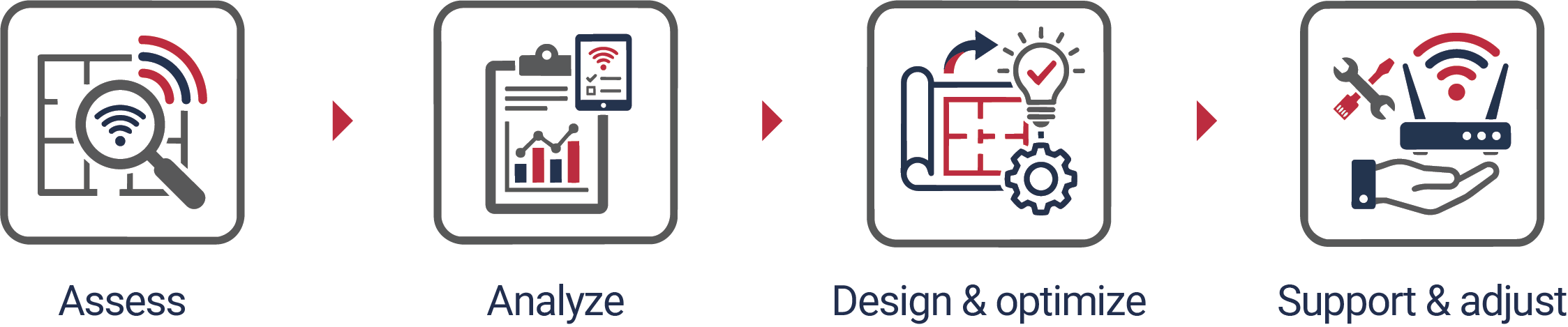
Step 1: Assess
We start by understanding your environment, requirements, and constraints. Every facility is different—construction materials, ceiling height, user density, application requirements, and interference sources all matter.

What we learn:
Your coverage requirements and dead zones
Number of users and device types
Bandwidth requirements and applications
Physical environment and construction
Existing infrastructure and budget



Step 2: Analyze
We conduct a professional WiFi site survey using Ekahau Sidekick or AirMagnet Survey Pro. This isn't a walk-through with a laptop—it's a methodical RF data collection process that reveals exactly how wireless signals behave in your space.
What we measure:
Signal strength and coverage patterns
Interference sources and noise floor
Channel utilization and overlap
Throughput and data rates
Roaming performance and handoffs
Step 3: Design & optimize
Based on the data we've collected, we create a detailed WiFi design or optimization plan. This includes access point placement, channel assignments, power levels, and configuration recommendations—all backed by predictive heat maps and capacity planning.
What you receive:
Detailed site survey report with heat maps
AP placement diagrams and mounting locations
Channel plan and configuration templates
Equipment recommendations (vendor-neutral)
Infrastructure and cabling requirements
Step 4: Support & adjust
After deployment, we conduct validation surveys to ensure the network performs as designed. If adjustments are needed—and they often are once real users hit the network—we optimize and fine-tune until performance meets requirements.
Ongoing support:
Post-deployment validation surveys
Performance tuning and optimization
Troubleshooting and issue resolution
Capacity expansion planning
Ongoing consulting and support contracts
Why data-driven design matters

The guesswork approach
Place access points based on coverage radius in spec sheets
Assume walls don't impact signal
Hope it works and troubleshoot later
Waste time and money on redesigns

The iBeamUSA approach
Measure actual radio frequency performance on-site
Account for real-world interference
Design based on data, not assumptions
Get it right the first time
Ready to start your project?
Schedule a consultation to discuss your WiFi network needs.